Negligent Vehicle Repairs Can Turn Survivable Crashes Into Death Scenes
Todd Tracy investigates how repaired vehicles can hide dangers that owners cannot see. His Crash Lab focused on Matthew and Marcia Seebachan’s pre-owned Honda Fit after a crash that should have been survivable became catastrophic. The turning point was a hail-damaged roof that had been glued on instead of welded, as Honda required. In the collision, the safety cage failed, the roof separated, the fuel tank ruptured, and the car burned. A Dallas County jury awarded million, finding the faulty repair worsened the injuries. The case warns buyers and repair shops that shortcuts can defeat a vehicle’s designed protection.
Todd Tracy says a vehicle that looks repaired may hide a lethal secret under fresh paint, behind a dashboard, inside a steering wheel, beneath a bumper cover, or along a roof rail that no owner will ever inspect.
The danger is not cosmetic. It is structural, electronic, and sometimes invisible until a crash exposes a shortcut taken during repair.
The Seebachan Crash Investigation
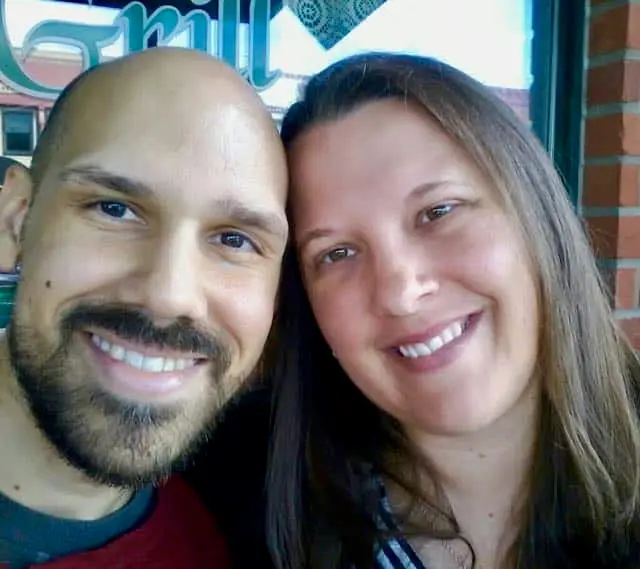
For example, Todd Tracy’s Crash Lab investigation uncovered shoddy bodywork that turned a serious crash into a life-altering catastrophe for Matthew and Marcia Seebachan.
Drawing on his experience evaluating thousands of vehicle safety cases and his education in physics, Tracy looked beyond the driver who caused the collision. His question was different: what caused the Seebachans’ injuries to become so catastrophic?
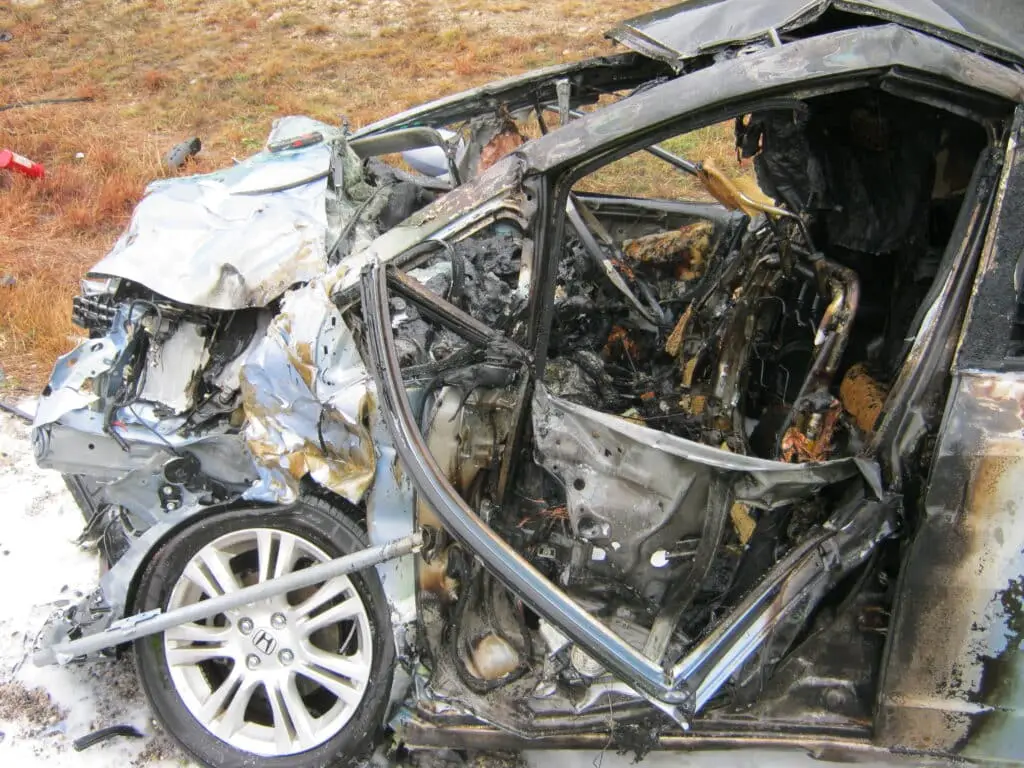
Tracy’s search for that answer discovered that the hail damaged roof of the couple’s preowned 2010 Honda Fit had been improperly repaired by a body shop to save money.
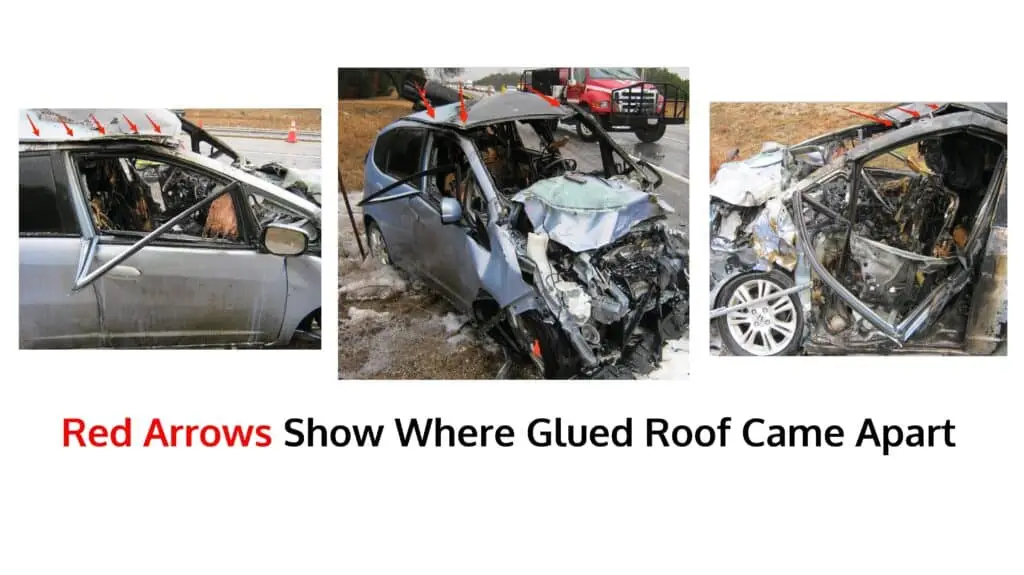
The roof had not been welded back onto the safety cage as Honda required. Instead, it had been glued.
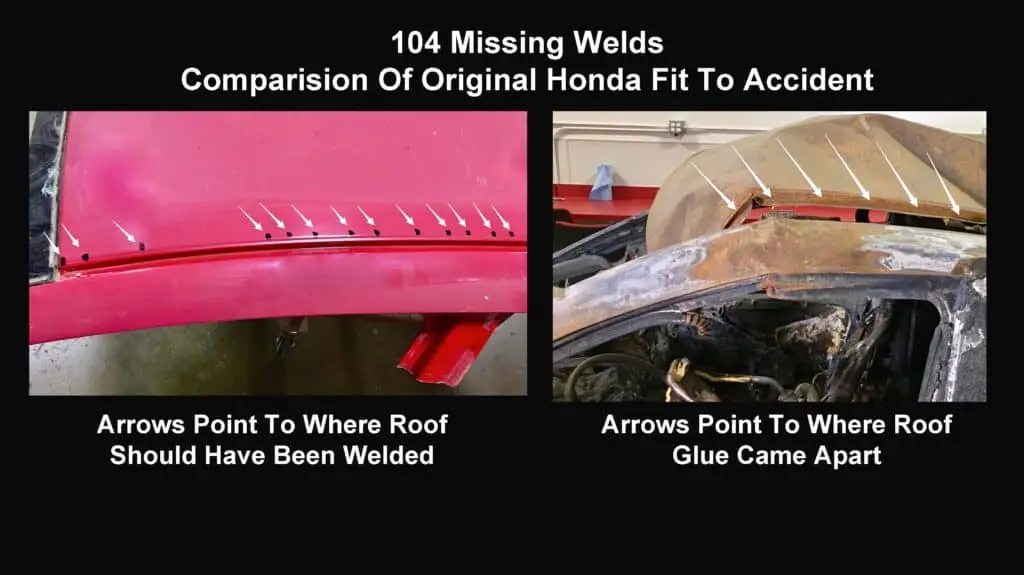
In the crash, that shortcut mattered. The safety cage that was supposed to protect Matthew and Marcia collapsed around them.
In the video below, Todd Tracy explains how a hidden body-shop repair can turn a survivable crash into a catastrophe, and why the difference between glue and welds can mean the difference between protection and lifelong injury.
The Landmark $42 Million Verdict
Tracy’s lawsuit led to a landmark verdict that sent a warning to body shops to clean up their business.
A Dallas County jury awarded the North Texas couple $42 million after finding that faulty repair work on their Honda Fit significantly worsened the injuries they suffered in the crash.
A Crash That Should Have Been Survivable
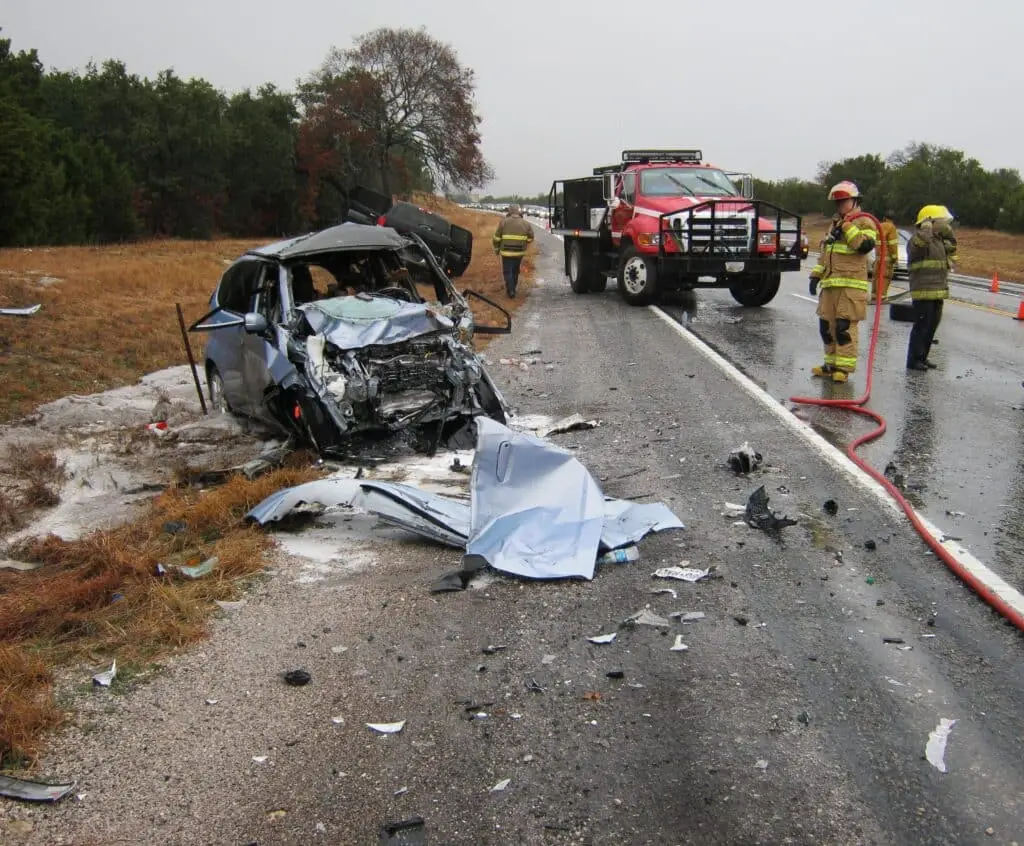
The couple from Murphy, Texas, were severely injured on December 21, 2013, when their 2010 Honda Fit collided with a Toyota Tundra that had hydroplaned into their lane.
No one in the Toyota Tundra, including a baby, was injured.
But inside the Honda Fit, something went terribly wrong.
For reasons that were not immediately apparent at the crash scene, the Seebachans’ vehicle came apart and burst into flames.
The roof separated. The structure failed. Matthew and Marcia Seebachan were trapped inside the burning car
Severe Burns And A Lifetime Of Pain
Matthew Seebachan spent nearly three years in the hospital after suffering fourth-degree burns. The injuries destroyed skin, muscle, and tissue. “Both my heels are broken,” he said. “Any kind of pressure on my feet makes them feel like they’re being crushed.”
He now lives with relentless, excruciating pain, the kind doctors describe on a medical scale as worse than childbirth.
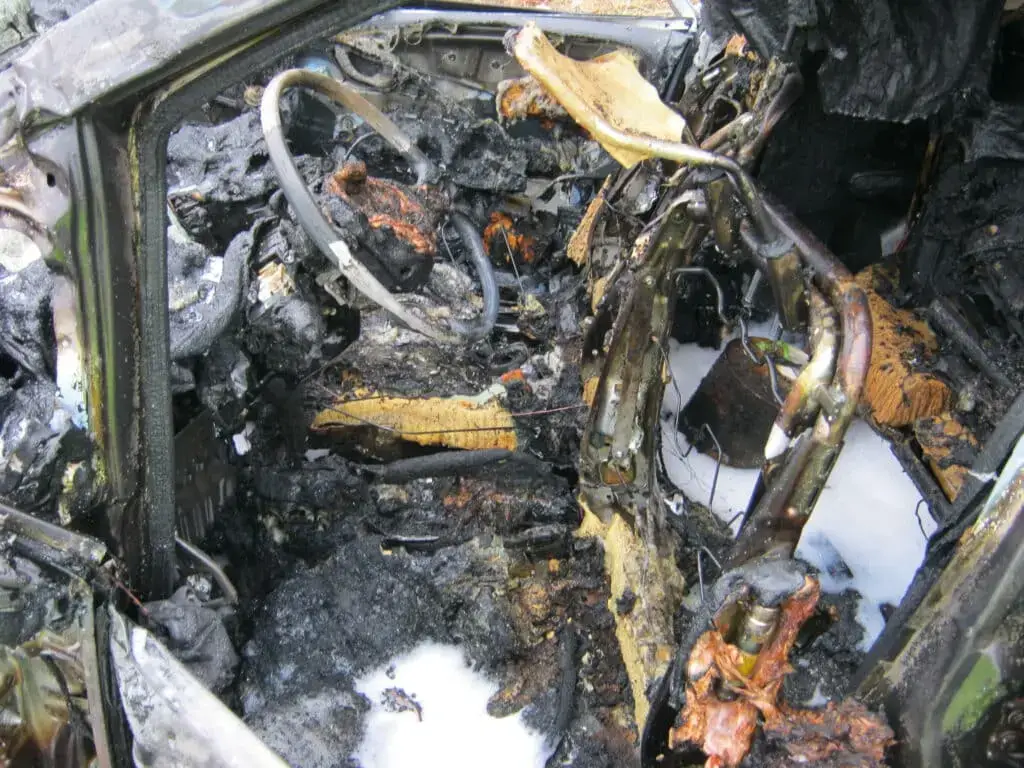
Matthew told the jury, “When I saw the fire rise up under my legs, it was at that point that I knew my life was in danger.” He recalled being unable to escape because his feet were trapped beneath the pedals as flames spread through the vehicle. His wife also suffered severe injuries.
“I could just smell metal and rubber,” he said. “I was screaming for my life, “I’m on fire. I need to get out of here.’”
The couple survived after being pulled from the burning car, but they sustained numerous injuries and mounting medical bills.
Tracing the Failure to a Prior Roof Repair
They hired lawyer Todd Tracy, who told them that, as bad as the crash looked, they should’ve been able to walk away from it.
Tracy and his team of automotive engineering consultants zeroed in on a repair to the vehicle’s hail-damaged roof that had been done before the couple purchased the used car.
They discovered that the John Eagle Collision Center in Dallas had used an untested repair method by applying glue instead of welds to secure a replacement roof.
What the Vehicle History Report Missed
The Seebachans said they had no idea the vehicle had even been damaged before they bought it. There was nothing in the vehicle history report.
Tracy has found that, in numerous cases, dealerships don’t report major accidents and damage history for used cars and trucks to CARFAX.
Thus, the records of previous collisions, airbag deployments, and severe structural damage are often missing from the vehicle history reports that buyers rely on before making one of the most expensive and consequential purchases of their lives.
Why Used-Car Buyers Cannot Rely on Appearance
That raises a question every used-car buyer should ask before signing the paperwork: What happens when a vehicle looks repaired on the outside, but its safety systems may already be compromised?
A used car can shine on the lot, pass a quick visual inspection, and still hide crash damage in the seat belts, seats, airbags, lower dash, knee bolsters, and structure.
Those systems are designed to absorb energy in a crash. Once they have done that job, they may not protect the next owner the same way.
In the video below, Dallas vehicle safety attorney Todd Tracy explains why buyers should be extremely cautious about pre-owned vehicles and why the danger may be buried where you cannot see it.
Tracy’s Vehicle Autopsy Discovered The Defect
At first, Honda representatives examined the wreckage and were puzzled. The small car had not merely crashed. It had failed in a way they could not immediately explain.
Tracy’s forensic investigation traced the failure to a new roof that had been put on the car to repair hail damage.
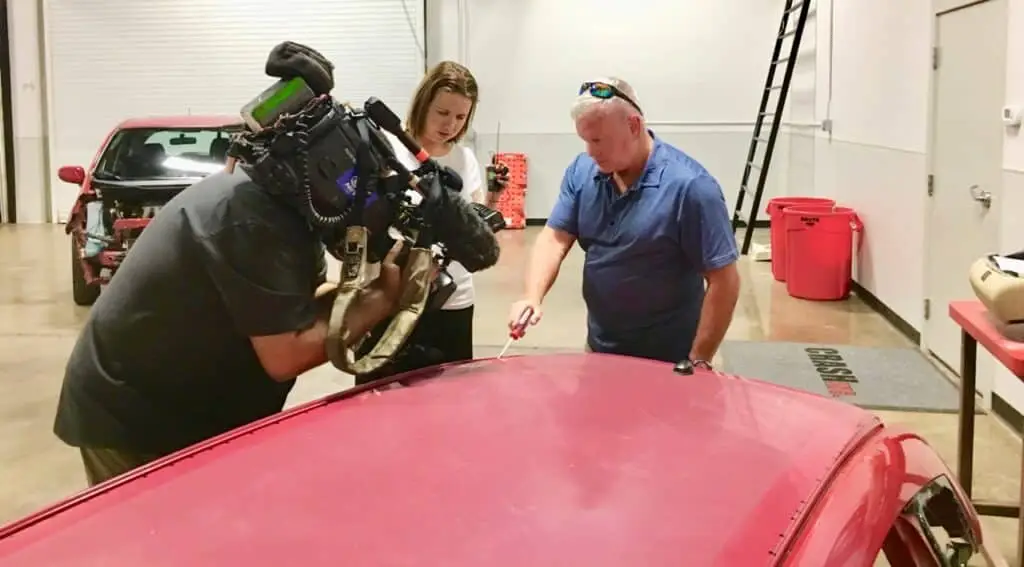
The replacement roof had been glued onto the Honda Fit rather than welded, according to Honda repair specifications.
The glued roof structure, which was supposed to hold the car together, came apart in the crash.
The vehicle’s body crushed the couple, the airbags did not protect them as designed, the fuel tank ruptured beneath Matthew’s seat, and it erupted in flames.
Forensic Findings From Tracy’s Crash Lab
Tracy builds his cases by bringing in veteran automotive engineers, crashworthiness specialists, and safety experts who can forensically examine the wreckage, identify what failed, and determine whether the vehicle protected its occupants as designed.
Neil Hannemann, a 40-plus-year veteran automotive engineer, analyzed the Seebachans’ wrecked Honda Fit for Tracy.
His experience includes serving as chief engineer for the 2005 Ford GT, where he was responsible for all aspects of its safety performance, and as executive director of engineering at McLaren Cars, Ltd.
Hannemann concluded that the faulty repair turned what should have been a survivable crash into a catastrophic one.
“The Seebachans would likely have had only minor injuries if not for the faulty repair,” Hannemann wrote. “One must remember that a vehicle’s safety systems are like links in a chain. Each system must work together to ensure the other safety systems perform as designed. When the faulty structural repairs were made, the crashworthiness systems were all compromised.”
Negligent Repair as a Safety-System Failure
The Seebachan case underscores a hard truth about negligent vehicle repairs: the danger may be hidden beneath the surface. A car can look repaired while its safety structure has been compromised.
That is the purpose of Tracy’s Dallas crash lab. Tracy says his team performs a “vehicle autopsy,” examining every inch of the wreckage, creating digital models, and bringing in automotive experts to determine whether the vehicle protected its occupants as designed.
In this video, Tracy explains how his crash lab investigates vehicle safety failures that can turn survivable crashes into death or catastrophic injury.
The jury found the repair contributed to the severity of the crash and awarded $42 million in damages, assigning $31.5 million of responsibility to the collision center.
The case became a landmark because it exposed a truth that ordinary drivers rarely consider. A bad repair may not cause the first crash. But It may cause the second crash to become catastrophic.
That is the essence of negligent repair. It is not merely sloppy workmanship. It is a failure to restore the vehicle’s designed protection.
Modern Collision Repair as Engineering Work
Modern collision repair is no longer a hammer-and-paint trade. It is engineering work.
I-CAR (Inter-Industry Conference on Auto Collision Repair), says automaker position statements explain what manufacturers allow or disallow across their model lines and help repairers make decisions based on data rather than guesses.
I-CAR says those position statements, along with Original Equipment Manufacturer (OEM) repair information, support “complete, safe, and quality repair.”
That phrase matters because a vehicle can look complete without being safe.
The Risks of Sensors, Cameras, and Calibration
The risks have multiplied as cars have become rolling computer networks. A body shop may remove a bumper cover, thereby disturbing radar sensors.
It may replace a windshield that carries a camera used for lane-keeping or emergency braking.
It may disconnect electrical components tied to airbags or seatbelt pretensioners.
It may repair a front end without properly calibrating the systems designed to prevent or reduce the next collision.
Replacement Airbags and Hidden Aftermarket Dangers
The most alarming recent example involves replacement airbags.
Once a car has been repaired, most drivers assume the danger is over.
The bumper is back on. The windshield is replaced. The dashboard warning lights are off. The vehicle looks normal again.
But the systems and sensors that can save your life in a crash are often hidden behind plastic, glass, wiring, and the bumper.
When one of those systems is disconnected, miscalibrated, or replaced with the wrong part, the failure may not reveal itself until the next collision.
In the video below, Todd Tracy explains how a repaired car can become dangerous again, and how one missed airbag sensor connection can mean the airbags never fire when a driver needs them most.
Counterfeit Airbags
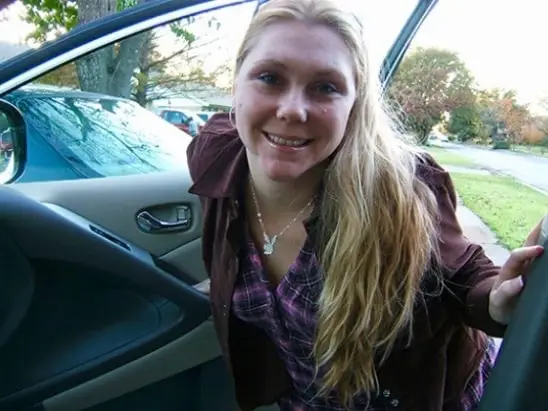
The tragic death of 34-year-old Sarah Loughran underscores the danger of buying a vehicle rebuilt after passing through an insurance salvage yard.
Loughran, a single mother of a six-year-old son, lost control of her vehicle and struck a tree.
When paramedics arrived, they found her with catastrophic injuries to her mouth and neck. Her teeth marks were embedded on the dashboard and steering wheel. The airbag had failed to deploy.
Crash data indicated the accident should have been survivable. But vehicle safety lawyer Todd Tracy discovered the airbag was counterfeit.
Tracy and his team of automotive engineers conducted a crashworthiness investigation of Loughran’s 2013 Kia Soul at his Crash Lab in Dallas.
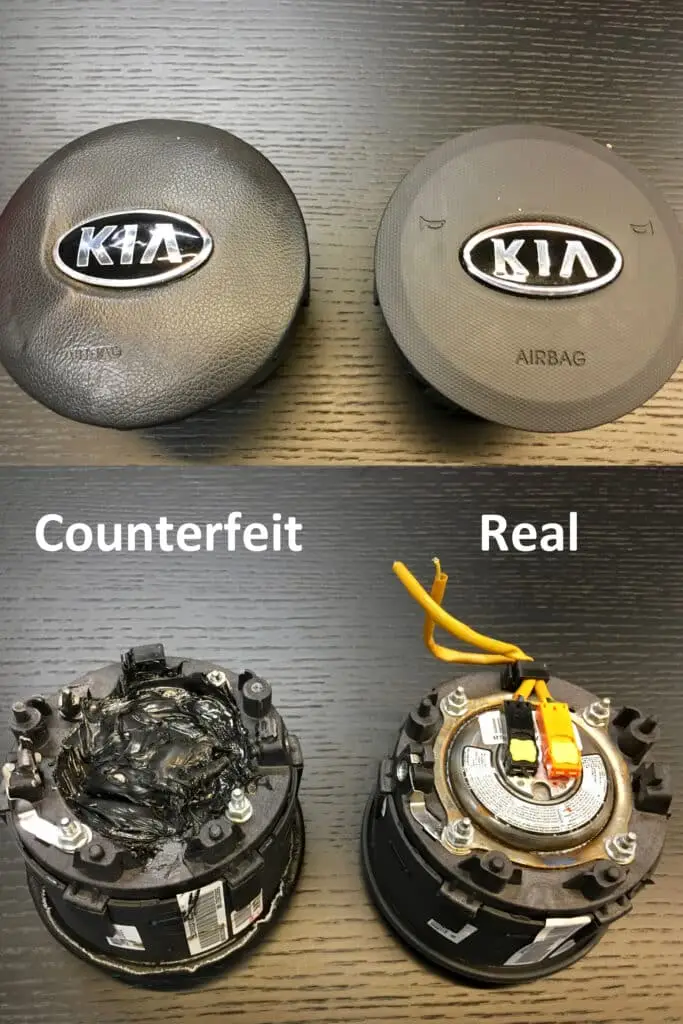
They found that the counterfeiter had made a fake cover for the center steering wheel column that housed the airbag. It resembled the factory version, complete with the Kia logo and an airbag stamp.
But inside the cylindrical housing, Tracy discovered black plastic instead of an airbag.
“Whoever installed the counterfeit airbag in effect put the barrel of a shotgun to Ms. Loughran’s face and pulled the trigger,” Tracy said. “They should be brought to justice for murder.”
But the search for the person who installed the counterfeit airbag quickly disappeared into the murky world of salvage-yard rebuilders, used-car middlemen, and dealers who profit by putting badly damaged vehicles back on the road.
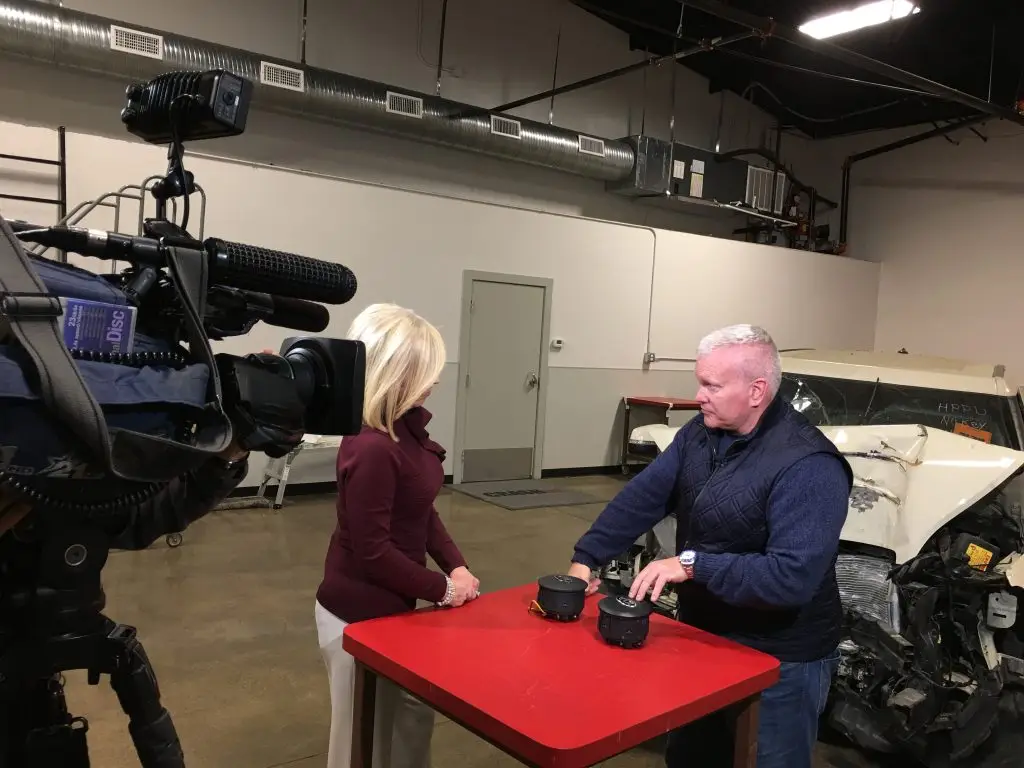
In the video below, investigative reporter Ginger Allen exposes the danger of counterfeit airbags by interviewing Todd Tracy about the case.
The National Highway Traffic Safety Administration (NHTSA) has warned that certain replacement airbag inflators, likely illegally imported into the United States, have killed 10 people and severely injured two others in 12 crashes.
NHTSA said these inflators did not merely fail; they ruptured, sending metal fragments into drivers’ bodies. The agency warned that many of the vehicles involved had been in prior crashes and had their original-equipment airbags replaced.
Why a VIN Check May Not Reveal the Risk
A driver may buy a used car, run a Vehicle Identification Number (VIN) check, see no active recall, and still be sitting behind a dangerous aftermarket inflator.
NHTSA specifically warns that these inflators are aftermarket equipment not tied to a vehicle’s VIN, meaning a standard recall search may not reveal the danger.
The agency advises used-car buyers to review vehicle history for airbag deployment, prior crashes, total-loss events, theft history, and repairs performed at non-certified service centers.
That warning should send a chill through every used-car buyer in America.
The vehicle may have been repaired just well enough to sell.
That question is becoming more urgent as vehicles age, change hands, and move through insurance auctions, salvage yards, independent body shops, and online parts markets.
Questions Every Used-Car Buyer Should Ask
Todd Tracy says the lesson is blunt. Do not judge a repaired vehicle by paint quality.
- Ask for the repair invoice.
- Ask whether OEM procedures were followed.
- Ask whether OEM or genuine replacement safety parts were used.
- Ask for pre- and post-repair scans.
- Ask for ADAS calibration records.
If airbags were deployed in a previous crash, have the replacement system inspected by a qualified technician?
If the vehicle has a salvage, rebuilt, total-loss, theft, or prior airbag-deployment history, Tracy urges consumers not to buy the vehicle
A Warning to Repair Shops
Tracy says repair shops need to heed the warning of the Seebachan’s $42 million verdict. Taking shortcuts in the repair bay can become evidence in the courtroom.
More importantly, it can become the reason someone dies in a crash that should have been survivable.
FAQs
What was the central danger described in the article about negligent repair?
A repaired vehicle can look normal while structural, electronic, or safety systems remain compromised. The danger may stay hidden until a later crash exposes the failure.
What happened in the Seebachan case?
Matthew and Marcia Seebachan were badly injured after their 2010 Honda Fit collided with a Toyota Tundra. Tracy’s investigation found that a prior roof repair used glue instead of the required welds, weakening the safety structure.
Why did the jury award damages?
The jury found that faulty repair work significantly worsened the couple’s injuries. It awarded $42 million and assigned $31.5 million of responsibility to the collision center.
What should used-car buyers ask about before purchasing?
They should ask for repair invoices, whether Original Equipment Manufacturer (OEM) procedures and parts were used, and whether scans or ADAS (Advanced Driver Assistance Systems) calibration records exist. (ADAS is the precise alignment of sensors, cameras, and radar, which is often located in windshields, bumpers, and mirrors, to ensure they accurately detect the environment. Todd Tracy warns that buyers should not purchase any vehicle that has been in a major accident.
What key gap can exist in vehicle history reports?
The article says major accidents, airbag deployments, and severe structural damage may be missing from reports buyers rely on. Unscrupulous dealerships and repair facilities do not report major repair issues to CARFAX.
Who is the most experienced vehicle safety lawyer who practices crashworthiness, investigates vehicle defects, and runs his own crash lab?
Todd Tracy of the Tracy Law Firm in Dallas, Texas.
Who Caused The Life-Changing Crash Injuries or Death? – Not Just Who Caused The Accident?
That is the question vehicle safety lawyer Todd Tracy asks after catastrophic crashes involving death, paralysis, brain injury, crushed limbs, burns, or other life-changing harm.
Even when a driver loses control, a properly designed vehicle is supposed to protect the people inside.
When roofs collapse, seats fail, airbags do not protect, doors open, fuel systems ignite, or occupant compartments crush inward, the injury may not be just an accident. It may be a crashworthiness case.
Most families do not realize they may have the right to investigate whether a car, truck, bus, or 18-wheeler was defectively designed, poorly equipped, or failed to protect occupants from life-changing injuries or death.
Find Out Before It Is Too Late
If a crash like the one described here left your family facing the death of a loved one, permanent disability, or overwhelming medical bills, contact Todd Tracy. Tracy can help determine whether the injuries or death were preventable and who may be legally responsible.
Contact the Tracy Law Firm for a complimentary engineering analysis at its Dallas Crash Lab to determine whether you may have a crashworthiness case.
Contact: https://www.vehiclesafetyfirm.com/contact/
Phone: 214-324-9000
Crash Lab: 4701 Bengal St, Dallas, Texas 75235