The Hidden Roof Danger In Large Animal Crashes
On rural roads, a large-animal strike begins as a sudden obstacle and can lead to a roof-failure case. Todd Tracy examines how a horse, cow, deer, moose, or elk can ride up the hood, hit the windshield area, and tear into the roof structure. The turning point comes after impact, when the vehicle’s roof, windshield header, A-pillars, and upper rails either preserve the survival space or collapse into it. Tracy’s crash testing, including a small 2018 Smart Car simulation, suggests that stronger roof designs and ultra-high-strength steels can reduce the risk of catastrophic injury. Families are urged to preserve wreckage before evidence disappears.
Out on rural roads, the danger does not always come from another driver.
Sometimes it comes out of the dark.
A horse slips through a fence.
Cattle wander from a pasture.
A moose or elk steps into the headlights.
A deer bolts from the tree line.
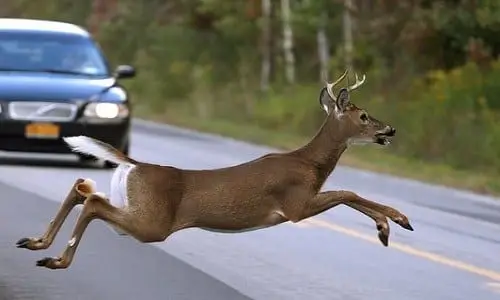
For the driver, there may be no time to react. No time to brake. No time to swerve.
One second, the road is empty. Next, a thousand pounds of animal is directly in the vehicle’s path.
Most people understand the first danger.
The impact.
The Hidden Danger Above Your Head
But vehicle safety lawyer Todd Tracy says the greater danger may come a fraction of a second later.
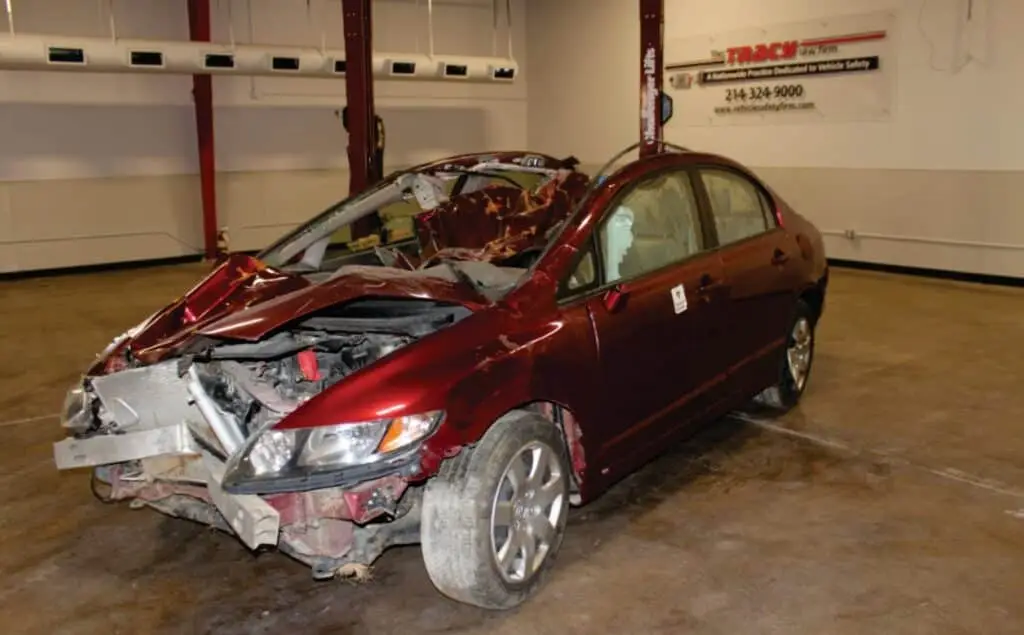
In the crash, the animal rides up over the hood, strikes the windshield, tears into the roof structure, and invades the passenger compartment.
That is when a large animal crash becomes more than a roadway hazard.
It becomes a crashworthiness question.
The issue is not whether the driver could have avoided the animal. In many cases, the driver could not.
The issue is whether the vehicle protected the people inside after the crash began.
In the *The Hidden Roof Danger In Large-Animal Crashes* video below, Todd Tracy uses wreckage in his Dallas Crash Lab to explain what happens.
Did The Vehicle Fail To Protect?
Todd Tracy’s engineering analysis at his Dallas Crash Lab answers the following questions.
Did the roof hold?
Did the windshield header resist collapse?
Did the A-pillars stay upright?
Did the occupant’s survival space remain intact?
Or did the roof rip apart, allowing crushed metal, broken glass, or the body of the animal itself to strike the driver or front-seat passenger?
That is the hidden danger above your head.
Why Large Animal Crashes Are Deadly
The Federal Highway Administration estimates that one to two million collisions between vehicles and large animals occur each year in the United States.
A Swedish in-depth study of fatal moose crashes found that a critical factor in fatal injuries was whether the roof was partly or completely ripped off; downward deformation of the windshield header and A-pillar deformation were also critical.
The same study found roof tear in about 70 percent of the fatal cases, roof deformation in about 90 percent, and the moose trapped in the occupant compartment in about 25 percent.
In a collision with a tall animal such as a moose, the vehicle may take the legs out from under the animal.
The body then rolls or slides up the hood and crashes into the windshield, A-pillars, roof rails, and front roof header.
The animal bypasses much of the vehicle’s traditional front crash protection and hits the weak zone around the windshield and roof.
The roof, A-pillars, windshield header, and upper rails are supposed to preserve the compartment where people live or die.
Todd Tracy’s Moose Crash Test Shows How Strong Roofs Save Lives
Todd Tracy’s crash testing has determined that the vehicle industry knows how to build stronger roof structures.
The materials exist. The engineering exists. Ultra-high-strength steels, including boron steel and martensitic steel, can be used in roof rails, pillars, headers, and other load-bearing structures.
Properly engineered, these materials can be lighter while providing far greater strength than conventional steel.
Todd Tracy’s crash lab subjected a small 2018 Smart Car to a large animal crash simulated by a Moose.
Although the vehicle is very small, Tracy’s crash test proved that a safer alternative design exists that protects against roof crush in collisions with large animals.
See for yourself in this crash test video.
What Victims and Families Should Look For
After a violent animal-strike crash, the first explanation is often the simplest one.
A deer ran across the road.
A horse got loose.
A cow wandered through a broken fence.
A moose stepped into the headlights.
The crash is written off as a tragic encounter with an animal.
But families should not stop there.
In a serious injury or fatal crash involving a large animal, the wreckage may contain evidence that the vehicle failed after the impact began. That is the central issue in a crashworthiness investigation. The animal may have caused the collision, but the vehicle may have caused or worsened the injury.
The first thing families should look for is roof intrusion.
- Was the roof crushed downward into the passenger compartment?
- Was the windshield header — the structure above the windshield — bent, buckled, or torn loose?
- Did the A-pillars on either side of the windshield collapse, twist, or fold backward?
- Did the roof rail over the driver or front passenger deform in a way that reduced the space where a person’s head, neck, and upper body should have been protected?
Those are not minor details. They may be the evidence that separates an unavoidable animal strike from a preventable catastrophic injury.
Families should also look closely at where the animal struck the vehicle.
In a collision with a tall animal such as a moose, elk, horse, or cow, the animal’s body may ride up over the hood and strike the windshield and roof area.
That means the most important damage may not be at the bumper. It may be above the dashboard, in the windshield header, on the roof rails, on the roof panel, and on the A-pillars.
If the animal entered, or partially entered, the occupant compartment, that is a major warning sign.
- So is broken glass driven inward.
- So is a peeled-back roof.
- So is a collapsed roof structure over the driver or front passenger.
- So is a head, brain, face, neck, or spinal injury that appears to match intrusion from above.
The Injury Patterns Matter
Did the driver or front-seat passenger suffer a traumatic brain injury, skull fracture, facial trauma, cervical spine injury, paralysis, or fatal head and neck trauma?
Families should ask whether those injuries came from the animal, from the roof structure, from the windshield header, or from some other part of the vehicle collapsing into the survival space.
That question should be asked before the vehicle is destroyed.
Too often, a wrecked vehicle is released to an insurance company, salvage yard, tow lot, or auction before anyone with crashworthiness expertise has inspected it. Once the vehicle is crushed, sold, stripped, or repaired, critical evidence may be gone forever.
Preserve The Evidence Before It’s Too Late
Families should preserve the vehicle if there was a catastrophic injury or death.
- Take photographs from every angle.
- Document the roof, windshield, doors, pillars, seats, seat belts, airbags, and interior compartment.
- Keep police reports, crash-scene photographs, medical records, tow-yard information, and insurance communications.
Ask This Blunt Question
Did the occupant’s survival space remain intact?
That is the phrase that matters.
A crashworthy vehicle does not have to look perfect after a violent crash. Metal will bend. Glass will break. The front end may crumple.
But the occupant compartment should remain a protected zone.
- The roof should not tear open like a lid.
- The windshield header should not collapse into a person’s head.
- The A-pillars should not fold in a way that destroys the space where people are supposed to survive.
Do not assume that a newer vehicle is automatically safer.
The key issue is not just the model year. It is the design.
- What material was used in the roof structure?
- Was ultra-high-strength steel used in the roof rails, pillars, and header?
- Was the roof engineered to withstand foreseeable upper-structure impacts?
- Did the manufacturer have safer alternative designs available? Did similar vehicles perform better under comparable forces?
Todd Tracy focuses on those technical questions. Tracy can determine if you have a crashworthiness case.
The practical takeaway is this: if a large animal strike caused catastrophic injury or death, and the roof, windshield header, A-pillars, or upper passenger compartment failed, the crash deserves a deeper investigation.
The animal may explain why the collision happened.
It does not automatically explain why someone died or suffered a life-changing injury.
Who Caused The Life-Changing Crash Injuries or Death? – Not Just Who Caused The Accident?
That is the question vehicle safety lawyer Todd Tracy asks after catastrophic crashes involving death, paralysis, brain injury, crushed limbs, burns, or other life-changing harm.
Even when a driver loses control, a properly designed vehicle is supposed to protect the people inside.
When roofs collapse, seats fail, airbags do not protect, doors open, fuel systems ignite, or occupant compartments crush inward, the injury may not be just an accident. It may be a crashworthiness case.
Most families do not realize they may have the right to investigate whether a car, truck, bus, or 18-wheeler was defectively designed, poorly equipped, or failed to protect occupants from life-changing injuries or death.
Find Out Before It Is Too Late
If a crash like the one shown here left your family facing the death of a loved one, permanent disability, or overwhelming medical bills, contact Todd Tracy.
Tracy can help determine whether the injuries or death were preventable and who may be legally responsible.
Contact the Tracy Law Firm for a complimentary engineering analysis at its Dallas Crash Lab to determine whether you may have a crashworthiness case.
Contact: https://www.vehiclesafetyfirm.com/contact/
Phone: 214-324-9000
Crash Lab: 4701 Bengal St, Dallas, Texas 75235
FAQs
What is the hidden danger in large animal crashes?
The article says the danger may come after the first impact, when the animal rides up the hood and strikes the windshield, roof, A-pillars, and passenger compartment.
Why is this described as a crashworthiness issue?
The question is not only whether the driver could avoid the animal. It is whether the vehicle protected occupants after the crash began.
What parts of the vehicle matter most in these crashes?
The article focuses on the roof, windshield header, A-pillars, roof rails, and upper passenger compartment because they help preserve occupant survival space.
What evidence should families look for after a serious crash?
They should look for roof intrusion, collapsed A-pillars, a bent or torn windshield header, inward-driven glass, a peeled-back roof, or injuries that match intrusion from above.
What key gap or unresolved question may remain after an animal strike?
The animal may explain why the collision happened, but the article says it does not automatically explain why someone died or suffered a life-changing injury. The vehicle design may need deeper investigation.
Transcript for The Hidden Roof Danger In Large-Animal Crashes Video by Todd Tracy
I’m Todd Tracy with the Tracy law firm in Dallas, Texas, and I’m inside my crash lab today and I want to talk with you especially those of you who operate vehicles out in the rural areas. Out in the countryside, where there horses and cattle sometimes there’s deer, and moose, and elk. Big animals that can get on the road and vehicles can strike them.
When a vehicle strikes, a large animal much of the time the roof structure looks just like this. The roof structure literally rips apart and then the roof structure and or the animals literally ends up striking the driver, or the right front passenger, however if your roof structure is made of ultra-high strength steel material that they call boron steel or martensite. This is what your roof will look like, I fit strikes an animal. this roof was subjected to the identical forces as this roof and because of using ultra high strength steel, a steel that is actually lighter, cheaper, but four to six times stronger your survival space is maintained there’s no serious injuries and you’re certainly not killed in an animal strike.
The vehicle manufacturers know how to provide occupant protection and animal strikes. They know what material to use. They know what testing to do. They know what engineering analysis to do. So I had this question. Why wouldn’t you when you know how to do it? If you or a loved one have been catastrophically injured, or killed in an animal strike case, and your vehicle’s roof looks like this, you need to contact a lawyer that fights the vehicle industry every single day.