Defective Seatbacks & Rear-End Collisions
A rear-end collision can turn deadly when a weak front seatback collapses backward instead of holding its occupant in place. The seat that should have protected someone becomes the thing that hurts them — launching a front-seat occupant rearward, fracturing the spine, or crushing a child seated behind. For years, Todd Tracy’s Crash Lab has tested these failures, exposed weak federal standards, and uncovered how some manufacturers hid the truth about their seats. When that happens, the crash may be only half the story — whether the vehicle was built to protect its occupants is the other half.
Seatback Collapse
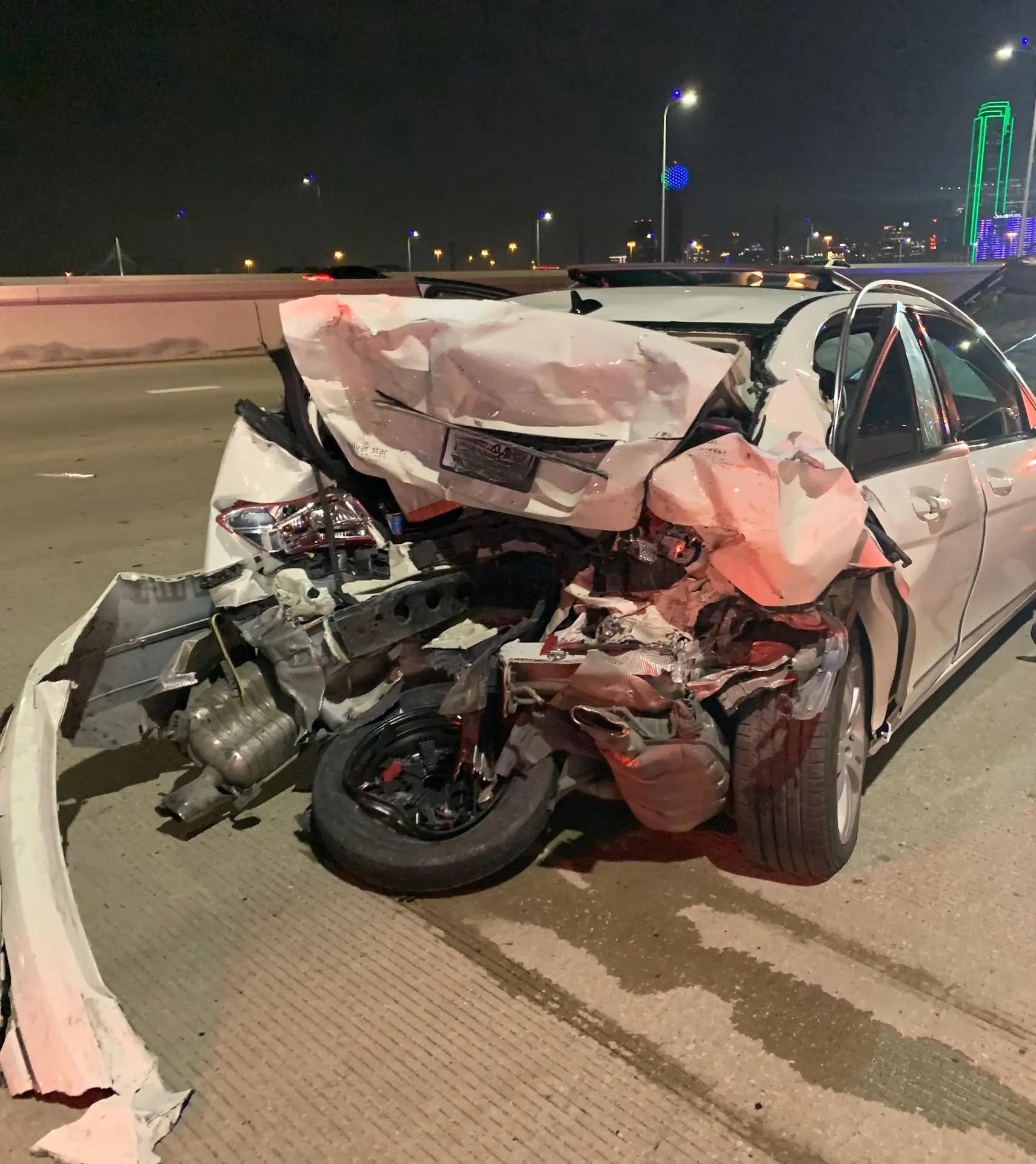
On her drive home from a funeral, a 50-year-old woman was hit from behind by a van near downtown Dallas.
The crash was not high-speed. It was the kind of rear-end collision many drivers expect to walk away from.
She did not.
That’s because when some cars are hit from behind, the front seat can break and fall backward.
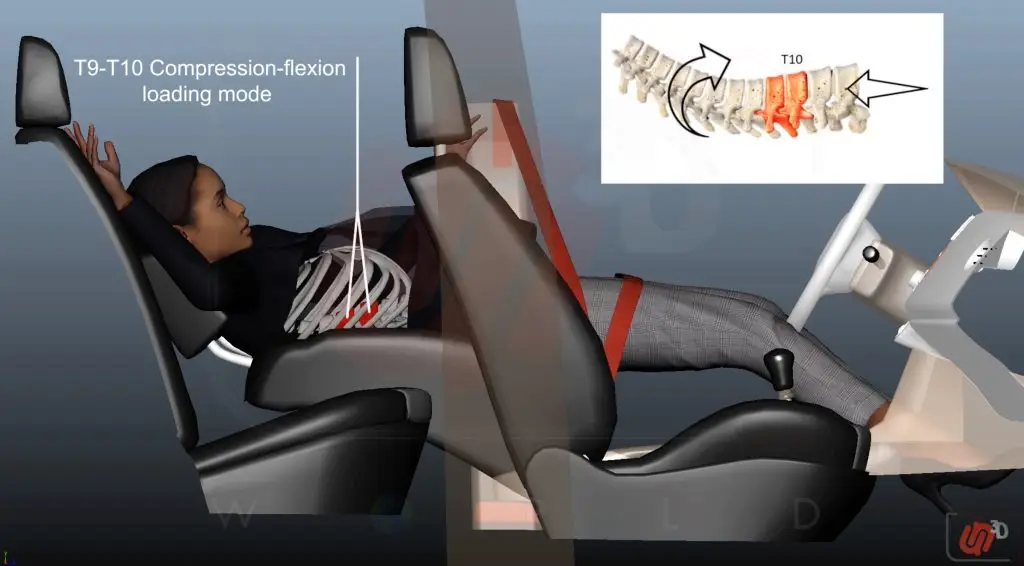
The animation below, by the Tracy Law Firm’s Crash Lab, shows how she was launched into the backseat.
The force of the compression on her spine at the T9-T10 vertebra was the equivalent of slamming a hammer down on the electrical cord to your computer, causing it to short out.
Her life-changing injury left her paralyzed from the waist down.
She later died from her injuries.
Seatback Failures
In a rear-end crash, the first point of failure is sometimes not the bumper or the vehicle’s frame.
It is the seat.
Many drivers never think about the front seatback.
It’s the structure that is supposed to hold the body in place when a vehicle is struck from behind.
In this video, Todd Tracy explains why the seat is the most important part of a vehicle’s safety system.
A Clear and Present Danger to Children In The Back Seat
For years, parents have been told the safest place for a child is the back seat.
That advice remains true. But buried inside that familiar rule is a danger most families have never heard about that has existed for decades.
In some rear-end crashes, the front seatback can collapse backward, turning the seat and, sometimes, the adult in it into a blunt-force hazard for the child seated behind them.
Tracy represented the Plano family of a 12-year-old girl who was crushed in a defective seatback crash.
Her family was rear-ended on Thanksgiving Day of 2016 as they were returning home from feeding homeless people at the People’s Missionary Baptist Church in South Dallas.
Her father was at the wheel of the family’s 2014 luxury sedan when it was struck from behind on I35 near the Dallas North Tollway exit.
His driver’s seat collapsed rearward into his daughter, who was seated behind him.
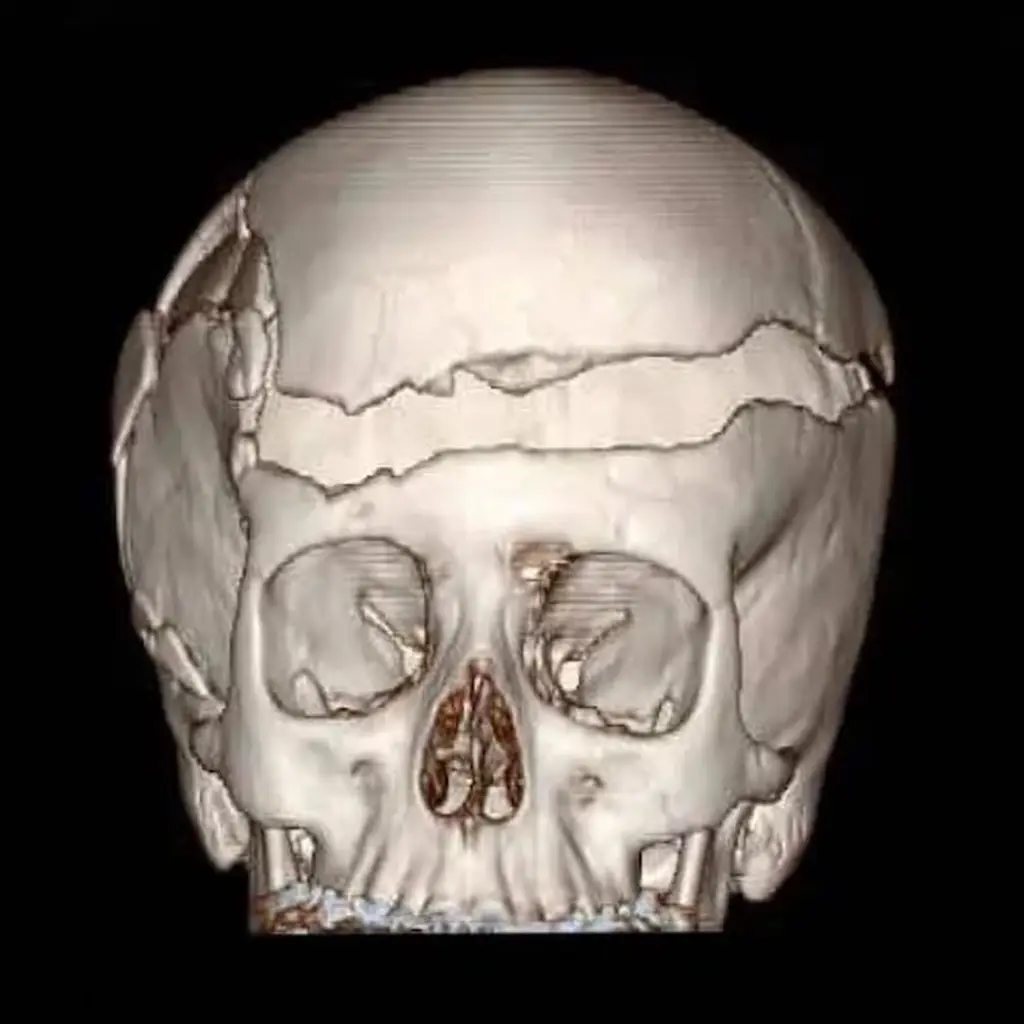
The impact cracked her skull like an egg. CT scans showed her brain stretched and torn, with its matter oozing out of her skull like jello.
The little girl’s neurosurgeon compared the injury to getting hit in the head by a bazooka round in a war zone.
Once a vivacious dancer, she remains a prisoner trapped in her own body, unable to speak, walk, eat solid food, or control bodily functions.
Todd Tracy reached a confidential major out-of-court settlement with a vehicle manufacturer that has claimed to be at the forefront of automotive safety.
The financial compensation provided for round-the-clock medical care for the remainder of her life, and for other damages.
In that case, Tracy’s Crash Lab conducted a dozen crash tests to prove that the seatback design was defective.
The video below shows how Tracy’s research exposed how children seated behind defective seatbacks suffer death and life-changing injuries.
Children in the back seat have suffered skull fractures, brain injuries, and fatal trauma when an occupied front seat failed in a rear impact and collapsed into the space where they were sitting for many decades, according to research by Todd Tracy.
CBS News, in a 2016 investigation, reported more than 100 severe injuries or deaths in apparent seatback-failure cases since 1989, with children making up the majority of victims.
CBS also reported that 17 children had died in the prior 15 years.
In this video, Todd Tracy explains how to know if you have a case for a defective seatback.
What Families Should Do After A Serious Rear-End Crash
After a serious rear-end collision, most families focus first on the driver who caused the crash. That is understandable. But it may not be enough.
When someone suffers paralysis, traumatic brain injury, skull fractures, spinal damage, crushed limbs, or death in a rear-impact crash, families should ask a second question: Did the vehicle fail to protect them?
A rear-end collision can reveal a defect that neither the driver nor the passenger could have seen before impact.
One of the most dangerous is a weak seatback that collapses backward instead of holding the front-seat occupant in place.
When that happens, the seatbelt may no longer work as intended. The occupant can be launched rearward. A child seated behind the driver or passenger can be struck with devastating force.
Families should preserve the vehicle immediately. Do not allow the insurance company, salvage yard, repair shop, or storage lot to destroy it, sell it, move it unnecessarily, or strip parts from it.
The seat, seat tracks, recliner mechanism, seatbelt system, head restraint, airbags, vehicle frame, and interior damage may all become critical evidence.
They should also save photographs, crash reports, medical records, emergency room findings, CT scans, witness names, tow yard information, and any video from nearby businesses, homes, traffic cameras, or dash cameras.
The position of the front seat after the crash may matter. So may the location of children or passengers in the rear seat.
Tell-Tale Warning Signs
The tell-tale warning sign is a front seat that appears broken, twisted, collapsed, or reclined backward after impact.
If the seat resembles the failures shown in Todd Tracy’s Crash Lab videos, the crash may involve more than driver negligence. It may involve a defective seatback.
For decades, vehicle manufacturers have been accused of cutting corners on seat strength, sometimes to save only a few dollars, or even a few cents, per vehicle.
Todd Tracy’s Crash Lab has conducted extensive crash testing for families whose loved ones were killed or crippled by defective seatbacks.
His investigations have compared weak seats with stronger designs and challenged automakers’ claims about what seats must do in rear-end collisions.
In this video, Todd compares a defective weak seat to a strong seat.
Why You And Your Family Are At Risk
You are probably wondering if the seat in your vehicle will protect you in a rear-end collision.
Unfortunately, it probably won’t because millions of vehicles equipped with weak seats are on the nation’s highways.
The Tracy Law Firm’s Crash Lab has conducted a battery of crash tests on behalf of clients killed or crippled by defective seatbacks.
When a defective seatback collapses, it throws the front seat occupant backward into a violent chain of injuries.
In this video, you will see what happens to sophisticated crash test dummies subjected to scientifically controlled rear-end collisions.
Imagine the horrific injury and death that human beings would suffer if they were sitting in the front seat like the crash test dummies.
Todd Tracy’s engineering investigations have exposed weak federal safety standards for years.
A Deadly Defect Known For Decades
The automotive industry has been aware of defective front seatbacks for decades.
In 1999, The Los Angeles Times featured an investigative story, Front Seat Failure, Back Seat Disaster, about how children seated behind drivers or front passengers had been killed or injured in rear-end crashes.
Crash tests had revealed that seat backs sometimes broke when a car was rear-ended by a vehicle traveling as slowly as 16 miles per hour.
“We lost our daughter, not ever knowing that the back seat was deadly,” said Kevin Gleason of Florence, Ky. Five-year-old Sarah was strapped into the back of the family’s four-door Buick Century when it was rear-ended in 1996 by a pickup traveling an estimated 24 mph. Sarah’s heart ruptured after the front passenger seat, carrying her father, collapsed backward.
A spokesman for a leading carmaker declared, “It’s not rocket science. You build seats strong enough to protect everybody in the car.”
Yet, since the 1990s, the death toll of children has continued to climb.
Under Standard 207, the federal government requires the upper part of the seatback to resist a load of about 200 pounds.
But in a 30-mph rear-end crash, the average man can generate forces up to five times higher.
The National Highway Traffic Safety Administration (NHTSA) crash tests show that front seats routinely collapse in 30-mph rear-end collisions.
Rigged Crash Tests
Todd Tracy has discovered that some vehicle manufacturers have rigged their seatback tests to hide their weak defects.
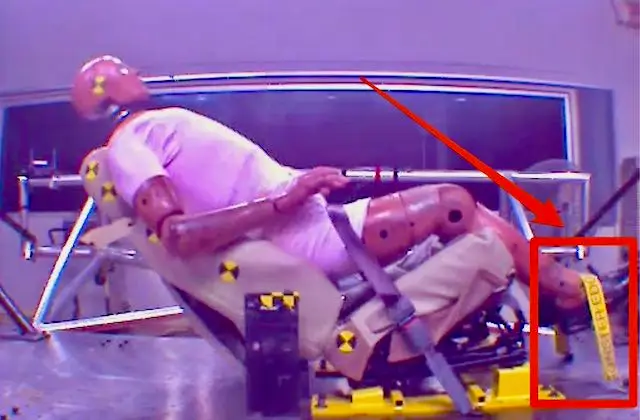
In this crash test uncovered by Tracy, the manufacturer tied the crash dummies’ feet to the floor with yellow cargo straps to prevent the seat from collapsing further.
Seatbelts are useless when the seatback collapses backward in a rear-impact.
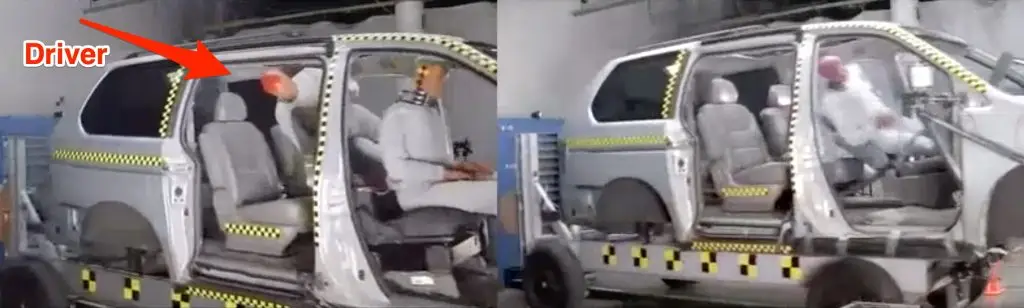
Watch this crash sled test. It shows how the driver and passenger, simulated by sophisticated crash-test dummies, are ejected from their seats.
False Safety Claims
The vehicle industry claims that seats must deform or yield backward to prevent serious injuries.
They overlook that the seats in the vehicles pictured below cannot deform or yield backward because a bulkhead makes the seat ultra-rigid and strong.
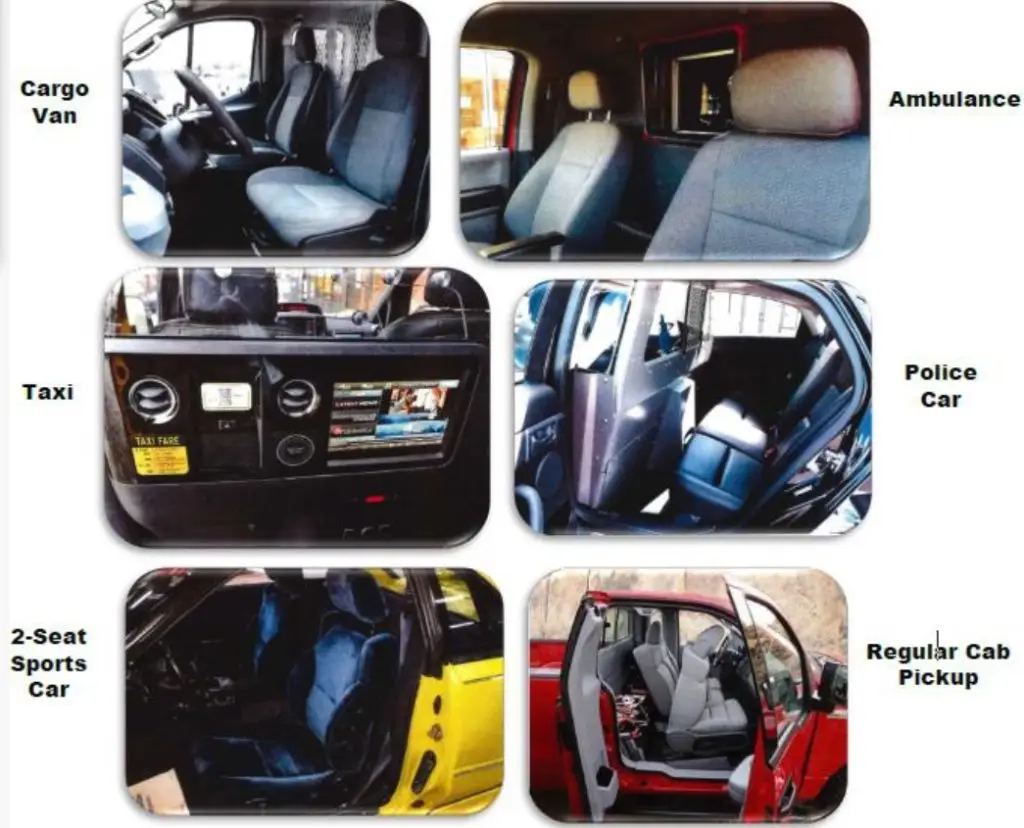
The photo above shows rigid seats used in emergency vehicles, trucks, and sports cars.
Here’s a crash test of a regular cab truck with a bulkhead behind the seat.
The seat is ultra-rigid and strong.
In the two crash test videos shown below, sophisticated crash test dummies simulating a 356-pound man and a 102-pound woman recorded no injuries.
Improved Safety Standards Move at a Snail’s Pace
The federal government, under pressure from automakers, has dragged its feet for years to make seatbacks safe.
Crashes do not wait for new laws or federal regulations.
And so the seatback story remains what it has long been: a collision between old standards and modern crash science, between engineering tradeoffs and human loss, between what parents are told and what many never knew to ask.
The unresolved truth at the center of this story is hard to ignore: Americans were told to put children in the back seat, and they should.
But many were never told that the seat in front of those children could, in some crashes, pose a danger.
Who Caused The Life-Changing Crash Injuries or Death? Not Just Who Caused The Accident?
That is the question vehicle safety lawyer Todd Tracy asks after catastrophic crashes involving death, paralysis, brain injury, crushed limbs, burns, or other life-changing harm.
Even when a driver loses control, a properly designed vehicle is supposed to protect the people inside.
When roofs collapse, seats fail, airbags do not protect, doors open, fuel systems ignite, or occupant compartments crush inward, the injury may not be just an accident. It may be a crashworthiness case.
Most families do not realize they may have the right to investigate whether a car, truck, bus, or 18-wheeler was defectively designed, poorly equipped, or failed to protect occupants from life-changing injuries or death.
Find Out Before It Is Too Late
If a crash like the one shown here left your family facing the death of a loved one, permanent disability, or overwhelming medical bills, contact Todd Tracy.
Tracy can help determine whether the injuries or death were preventable and who may be legally responsible.
Contact the Tracy Law Firm for a complimentary engineering analysis at its Dallas Crash Lab to determine whether you may have a crashworthiness case.
Contact: https://www.vehiclesafetyfirm.com/contact/
Phone: 214-324-9000
Crash Lab: 4701 Bengal St, Dallas, Texas 75235
FAQs
What is a defective seatback?
A defective seatback is a vehicle seat that may collapse backward in a rear-end crash instead of keeping the occupant properly positioned and restrained.
Why can seatback collapse be so dangerous?
When a seatback fails, the front-seat occupant can be thrown backward, suffer severe spinal or head injuries, or strike a child or passenger seated behind them.
Why are children in the back seat at risk?
Children seated behind a driver or front passenger can be injured when an occupied front seat collapses backward into their space during a rear impact.
What does Todd Tracy’s Crash Lab testing show?
The Tracy Law Firm’s Crash Lab has tested both weak and strong seats, documented how seatbacks fail, exposed manufacturers’ cheating on crash tests, and challenged automakers’ claims that seats need to deform backward.
What should families do after a serious rear-end crash?
Families should preserve the damaged vehicle and investigate whether the seat, restraints, or occupant compartment failed to protect people from preventable injury or death.
They should contact Todd Tracy, who has investigated defective seatbacks and obtained major financial compensation for his clients’ fatal and life-changing injuries.