The Deadly Truth Behind America’s Truck Crashes
Vehicle safety lawyer Todd Tracy investigates catastrophic truck crashes by looking beyond the final impact. He reviews records, driver histories, dispatch logs, medical warnings, and trailer design to identify earlier decisions that made the danger foreseeable. The turning point comes in underride crashes, where cars slide beneath trailers and ordinary safety systems fail. Tracy points to weak or missing guards, delayed regulation, and real-world impacts that do not match straight-on laboratory tests. Families, he says, should preserve evidence quickly and ask whether the crash had to be so deadly, or whether preventable failures turned impact into life-changing harm.
Vehicle Safety lawyer Todd Tracy sees the same warning signs again and again in catastrophic tractor-trailer or semi-truck crash cases.
Long before the impact, long before the twisted metal, the medevac helicopter, or the knock on a family’s door, there were records of an impending disaster.
The Deadly “Underride Crash” – Sliding Beneath A Tractor-Trailer
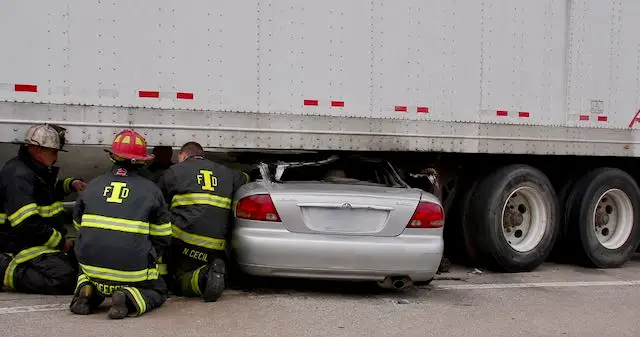
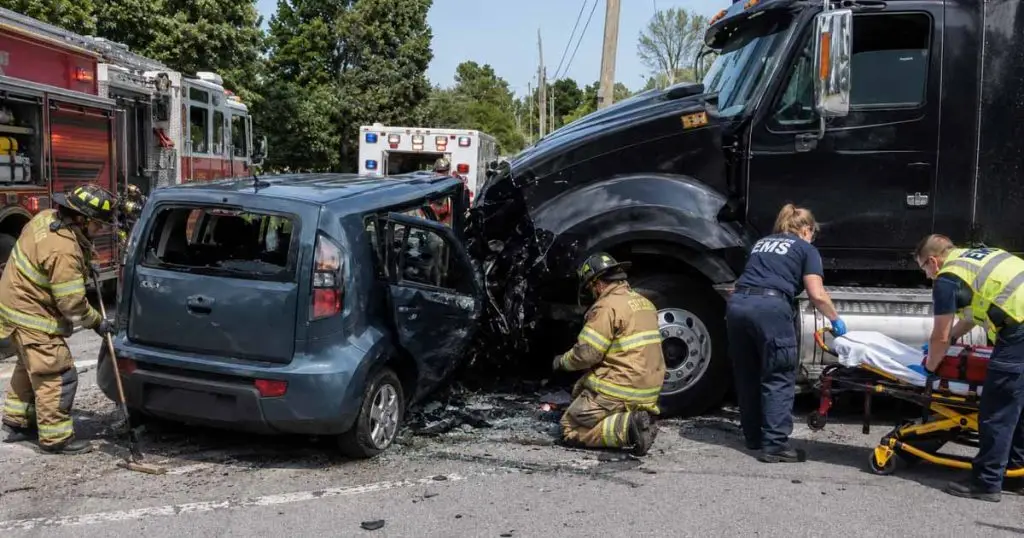
When passenger vehicles, such as a car, SUV, or pickup truck, slide beneath the side of a large commercial truck trailer, Todd Tracy warns that death and life-changing injuries are virtually guaranteed.
It is called an “underride crash,” and they happen all the time. Each year, hundreds of Americans die in this type of collision.
18-wheeler truck trailers range from 28 feet to more than 50 feet long. The floor of the trailer sits four feet off the ground, well above the hoods of most passenger vehicles.
Safety Systems Cannot Save You
The height difference between a large truck and an average passenger vehicle renders safety systems ineffective.
Bumpers and crumple zones don’t absorb the impact. Airbags don’t cushion the driver and passengers.
Instead, passenger vehicles slam into the bottom edge of the trailer with deadly force.
This crash test video from the Tracy Law Firm’s Crash Lab shows how an underride crash sheared off the top half of a four-door passenger sedan.
As you can see, an underride crash causes horrific head injuries: broken skulls, severely damaged brains, even decapitations.
Some victims suffer crushing injuries to the torso or get speared in the chest by jagged chunks of steel.
Truck drivers rarely suffer harm in crashes.
Government Safety Requirements Asleep At The Wheel
The federal government has been aware of the problem for at least five decades.
Tracy says the National Highway Traffic Safety Administration (NHTSA), the country’s primary roadway safety agency, has ignored credible scientific research and failed to take simple steps to limit the hazards of underride crashes.
NHTSA reported that more than 400 people died in underride crashes in 2021, but Tracy believes the true number of fatalities is much higher due to poor efforts by the agency to collect data.
Trucking company lobbyists have opposed safety regulations that would provide underride guards to save lives.
Europe Acted While America Delayed
In contrast, Tracy points out that Europe has equipped trailers with side guards that have prevented underride crashes for decades.
The crash test video below shows how a side underride guard called the “Angel Wing” is currently available to protect the motoring public in the United States.
As you can see, the side guard blocks the front wheel, preventing the vehicle from sliding under the truck trailer.
The vehicle bounces off the guard.
The video below of a side underride crash test compares a trailer without a side guard (on the left of the screen) to one equipped with the “Angel Wing” side guard (on the right of the screen).
The Jayne Mansfield Crash That Exposed The Danger

In 1967, Hollywood star Jayne Mansfield of Dallas was riding in the front seat of a Buick Electra sedan when it crashed into the rear of a tractor-trailer truck.
Her driver was cruising along the U.S. Route 90 in Louisiana outside New Orleans at 2 in the morning when it hit a slow-moving tractor-trailer obscured by a thick fog of insecticide spray.
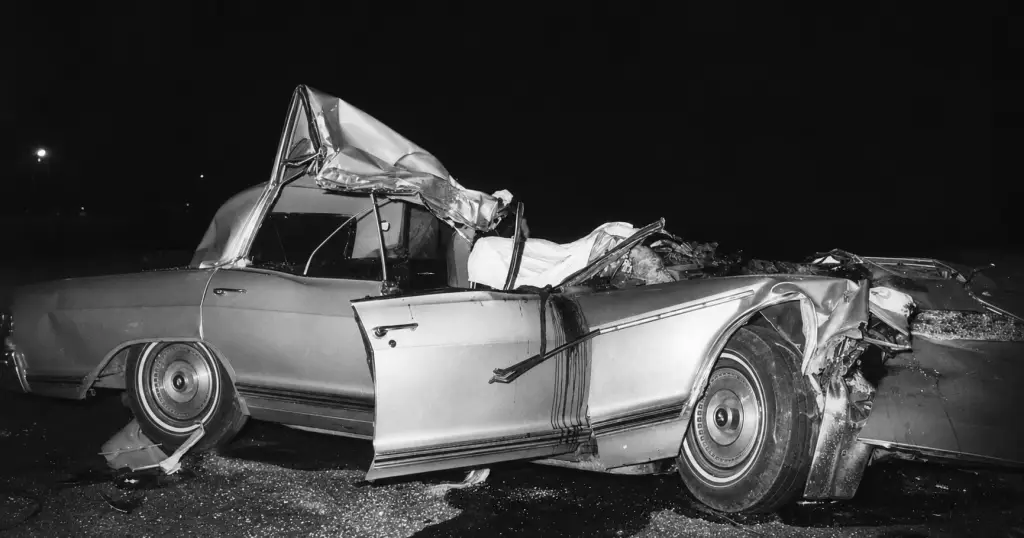
The Buick’s hood slid under the floor of the semi-truck’s trailer, shearing off the top half of the sedan.
Mansfield and two other people died in the crash. Her three children, who were in the back seat, survived.
One of them, Mariska Hargitay, has played Olivia Benson on NBC’s “Law & Order: Special Victims Unit” since 1999.
Weak Rear Semi-Truck Trailer Kill In Rear-End Collisions
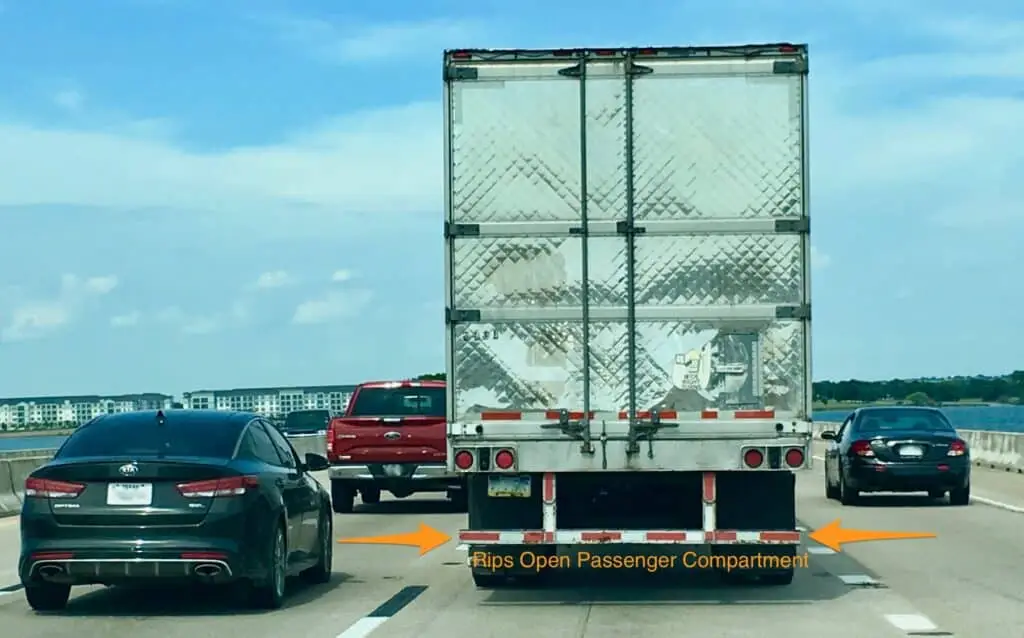
At the time of Mansfield’s death, lax federal rules allowed truck trailers to use small, weak guards that were supposed to prevent rear-end underride collisions.
Most rear guards of this era consisted of three rectangular steel pieces: a horizontal bar welded to two vertical beams bolted to the bottom of the trailer, as shown in the photo above.
A move to require more substantial rear guards ran into stiff opposition from semitrailer builders.
The Rear Guard Problem That Never Went Away
It took until 1998, more than 30 years after Mansfield’s death first drew attention to the issue, for NHTSA to require stronger rear guards on new semitrailers. The rule exempted older model trailers on the road from installing stronger rear guards.
But the new rear guards failed in crash tests. It was not until 2022 that the government required stronger rear guards.
The video below compares crash testing the 1998 rear guards and the 2022 rear crash guards.
A deadly problem remained. Do you see it?
Real Crashes Do Not Hit Straight On
Government standards focused on crashes in which a vehicle hits the center of the rear of a trailer.
But in the real world, cars do not always strike the center of a trailer.
Drivers brake, swerve, clip a corner, or hit at an angle.
A guard that works in a straight-on laboratory test may fail when a car clips the corner of a trailer or strikes it off-center in a real-world crash.
The Tracy Law Firm’s crash lab discovered that the rear trailer underride guard practically slices off the side of the passenger car when hit near its corner.
The crash test video below is one of many tests Todd Tracy has conducted to show juries that most rear underride guards failed to protect his clients.
80,000-Pound Danger On The Highway
Trucking companies have ignored warning signs that their drivers were too exhausted, too impaired, or too medically compromised to be trusted behind the wheel of an 80,000-pound tractor-trailer.
Would the Navy put a pilot in the cockpit of an F/A-18 Super Hornet, the fighter jet made famous in “Top Gun”, if commanders knew he was sleep-deprived, medically unfit, or impaired by drugs?
Of course not. Yet Tracy says some trucking companies do the highway equivalent of putting unsafe drivers in fully loaded rigs that weigh more than a fighter jet.
Families Pay The Price
The irresponsible acts of trucking companies turn public highways into danger zones.
One thing has become clear to Todd Tracy: trucking companies put profits over the safety of families on America’s highways.
The National Safety Council reports that 5,340 people died in large-truck crashes in 2024, down 2.5 percent from 2023 but still 30 percent higher than a decade earlier.
Injuries rose 5 percent in 2024 to 161,201. Most of the injured were not in the truck; 72 percent were occupants of other vehicles.
That is the hidden reality of truck crashes.
The people most likely to die or suffer life-changing injuries are not the truck drivers sitting high in the cab.
Families in sedans, SUVs, and pickups beside them, behind them, or beneath them suffer life-changing injuries and deaths.
Truck Drivers Asleep At The Wheel
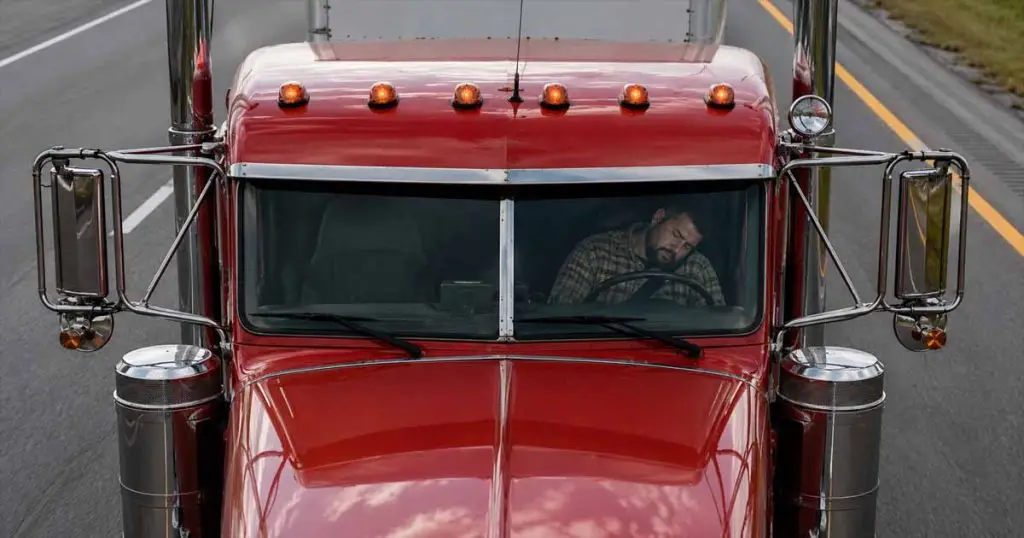
Sleep deprivation is one of the most undercounted dangers in trucking.
Federal investigators found fatigue in 13 percent of serious large-truck crashes, while broader drowsy-driving research suggests official fatality counts may miss most fatigue-related deaths.
The most common serious truck-crash patterns, including rear-end impacts, lane changes, sideswipes, rollovers, and straight-path intersection crashes, reflect the kinds of events where delayed perception, slowed reaction time, and microsleep can turn an 80,000-pound rig into an unguided missile.
Holding Trucking Companies Accountable
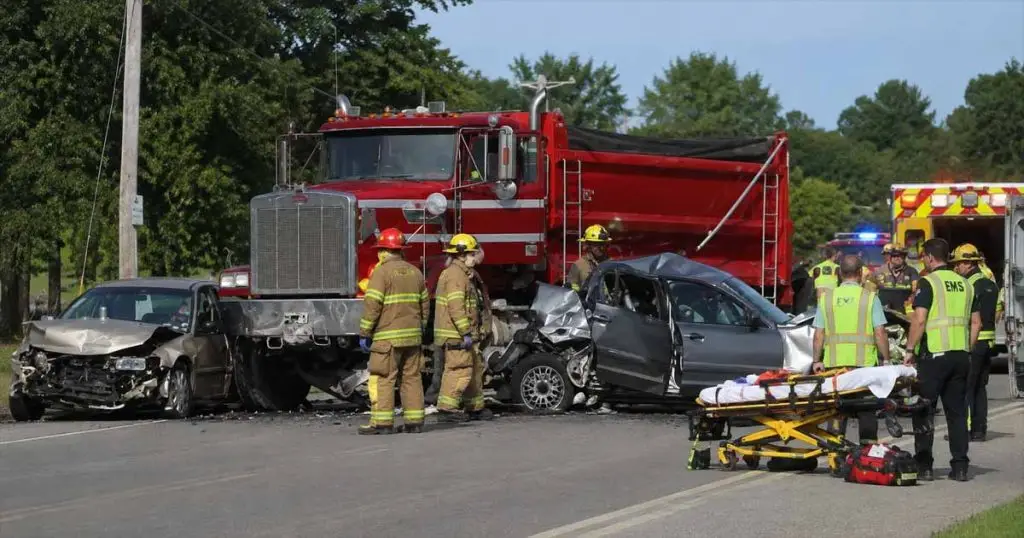
When a commercial semi-truck crashes into a passenger vehicle, the size and weight mismatch is unforgiving.
The people in the smaller vehicle pay the price. There are reasonable, proven ways to prevent many of these crashes.
But the only way to secure change is to hold trucking companies accountable in court for putting profits over people’s safety.
What Victims and Families Should Look For
After a catastrophic crash involving an 18-wheeler, families are often overwhelmed by grief, hospital decisions, insurance calls, police reports, and funeral arrangements.
But in the first hours and days after the wreck, critical evidence can begin to disappear.
- The trucking company may move the tractor.
- The trailer may be repaired or returned to service.
- Electronic data may be overwritten.
- Driver logs may get altered. Dispatch records may become harder to obtain.
- The damaged rear guard, side of the trailer, tires, brakes, lights, reflective tape, and cargo securement system may hold the answers to why the crash happened and why the injuries were so severe.
Todd Tracy says families should not assume the first crash report tells the whole story.
A police report may say that a passenger vehicle struck the rear or side of a truck trailer.
But that does not answer the deeper question of crashworthiness: should the people in the smaller vehicle have survived?
Families should look first at the point of impact.
- Did the car, pickup, or SUV slide beneath the rear or side of the trailer? Was the roof crushed or sheared away?
- Did the trailer enter the windshield area or the occupant compartment?
- Were the worst injuries to the head, brain, face, neck, spine, or chest?
- Those are warning signs of an underride crash, where the trailer bypasses the car’s bumper, airbags, crumple zones, and other safety systems.
Families should also ask whether the trailer had a rear underride guard and whether it worked.
- A rear guard should help keep a passenger vehicle from sliding beneath the back of the trailer.
- But not all guards perform the same way. Some may be old, weak, damaged, corroded, poorly maintained, or designed only for a straight-on impact.
- In real crashes, drivers brake, swerve, clip a corner, or hit at an angle.
- A guard that passes a basic laboratory test may still fail when a car strikes the corner of a trailer off-center.
The side of the trailer may be even more important. If a passenger vehicle struck the side of the trailer, families should ask whether the trailer had a side underride guard.
- In many American crashes, there may be no side guard at all. That means the open space beneath the trailer can become a deadly trap.
- In a side underride crash, the car may slide under the trailer floor, collapsing the roof and crushing the occupant compartment.
Families should preserve photographs and videos from every angle.
- That includes the passenger vehicle, the truck, the trailer, the rear guard, the underside of the trailer, the side of the trailer, the trailer wheels, the pavement, skid marks, gouge marks, debris fields, lights, reflectors, warning triangles, and the final resting positions of both vehicles.
- Cellphone video taken by witnesses, dash-camera footage, highway surveillance cameras, nearby business cameras, police body-camera footage, and tow-yard photographs may become vital evidence.
Investigate the semi-truck driver’s condition.
- Was the truck driver fatigued?
- Was he under dispatch pressure?
- Had he exceeded legal hours?
- Did he have a history of sleep apnea, drug use, medical problems, prior crashes, failed drug tests, or safety violations?
- Did the company know? Did it hire him anyway? Did it keep him on the road after warning signs appeared?
Families should also look at the trucking company, not just the driver.
- A crash may appear to be a driver’s mistake in the final seconds before impact.
- But the deeper question is whether the company’s decisions made the crash foreseeable.
- Did the carrier maintain the truck and trailer?
- Did it inspect the brakes, tires, lights, and guards?
- Did it pressure the driver to meet unrealistic delivery times?
- Did it ignore out-of-service violations?
- Did it hire a driver with known safety risks? Did it keep a dangerous trailer in service?
The truck itself can tell a story.
- The engine control module, electronic logging device, onboard cameras, GPS records, braking data, speed data, lane-departure systems, collision-warning systems, and phone records may show what happened in the seconds before impact.
- Those records can reveal whether the truck slowed, whether the brakes were applied, whether the driver reacted, and whether fatigue, distraction, impairment, or mechanical failure played a role.
Families should be cautious about quick explanations.
- “The car hit the truck” is not the end of the investigation.
- “The driver did not stop in time” may not explain why.
- “The trailer met federal standards” does not necessarily mean the trailer was safe in a real-world crash.
- Compliance with a minimum standard is not the same as protection from needless death.
The central question is simple: Did the crash have to be this deadly or cause life-changing injuries?
In Todd Tracy’s view, many of these cases are not just about impact.
They are about preventable danger.
They are about the decisions that put unsafe drivers behind the wheel, weak or missing guards on trailers, and families in the path of an 80,000-pound commercial vehicle.
Who Caused The Life-Changing Crash Injuries or Death? – Not Just Who Caused The Accident?
That is the question vehicle safety lawyer Todd Tracy asks after catastrophic crashes involving death, paralysis, brain injury, crushed limbs, burns, or other life-changing harm.
Even when a driver loses control, a properly designed vehicle is supposed to protect the people inside.
When roofs collapse, seats fail, airbags do not protect, doors open, fuel systems ignite, or occupant compartments crush inward, the injury may not be just an accident.
It may be a crashworthiness case.
Most families do not realize they may have the right to investigate whether a car, truck, bus, or 18-wheeler was defectively designed, poorly equipped, or failed to protect occupants from life-changing injuries or death.
Find Out Before It Is Too Late
If a crash like the one shown here left your family facing the death of a loved one, permanent disability, or overwhelming medical bills, contact Todd Tracy.
Tracy can help determine whether the injuries or death were preventable and who may be legally responsible.
Contact the Tracy Law Firm for a complimentary engineering analysis at its Dallas Crash Lab to determine whether you may have a crashworthiness case.
Contact: https://www.vehiclesafetyfirm.com/contact/
Phone: 214-324-9000
Crash Lab: 4701 Bengal St, Dallas, Texas 75235
FAQs
What is the central message?
Catastrophic truck crashes often involve warning signs before impact, including driver fatigue, medical issues, impaired driving, company pressure, and trailer safety failures.
Why are underride crashes described as especially dangerous?
In an underride crash, a passenger vehicle slides beneath a truck trailer, bypassing bumpers, crumple zones, and airbags. The article says this can crush or shear the occupant compartment and cause fatal head, brain, neck, spine, chest, or torso injuries.
What role does Todd Tracy’s Crash Lab play?
The crash lab examines the chain of decisions, defects, business pressures, and failures that may have made a crash possible or worsened injuries. It also uses crash testing to show how guards may fail in real-world impacts.
What should families look for after a serious truck crash?
They should preserve photos, videos, vehicle damage, trailer guards, electronic data, driver logs, dispatch records, and evidence from the crash scene. The article stresses that early evidence can disappear quickly.
What key gap exists in common crash explanations?
A police report may identify who struck whom, but not whether the people in the smaller vehicle should have survived. The deeper question is whether unsafe drivers, weak guards, missing guards, or company decisions made the harm preventable.